Posts

The Carmont Train Crash

Image
What it means for Infrastructure Climate Resilience Six years ago, on the morning of 12 August 2020, a ScotRail passenger train derailed near Carmont, south of Stonehaven in Aberdeenshire. The derailment was caused by the train striking debris washed onto the track following an intense rain storm. The accident claimed three lives, injured six others and became the deadliest railway accident in Britain for almost two decades. Yet the tragedy was more than an isolated engineering failure. The investigation conducted by the independent Rail Accident Investigation Branch (RAIB) concluded that it exposed wider weaknesses in the way Britain's railway understood and managed the risks posed by increasingly severe weather[1]. As climate change alters rainfall patterns and increases the potential for more frequent episodes of intense rainfall, Carmont has become a defining case study in the importance of building climate resilience into ageing infrastructure. Before considering the technical...
Quietly does it...

Just quietly slipping into your feed again after a short break. No fanfare. No big announcements. No grand plans. Just this, after an extended hiatus, followed by a planned "grand" return that fizzled out before beginning.  It's just like another corporation quietly dropping their net zero ambitions, expecting nobody to notice.  Why now? If you haven't been living under a rock the last few months (and I'd be slightly envious if you have) you will be well aware of the climate related news.  We have seen tumbling temperature records already this summer. Highest May and June temperatures in the UK, record temperatures across much of Europe and parts of North America.  Events for the US semiquincentennial celebrations were cancelled in DC due to extreme heat and New York City had established cooling centres for vulnerable people. The UK has had three heatwaves already by mid-July. Wildfires are widespread with multiple fatalities in Spain and hundreds of thousands eva...

Getting Back in the Saddle, Part 1

Image
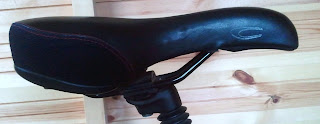
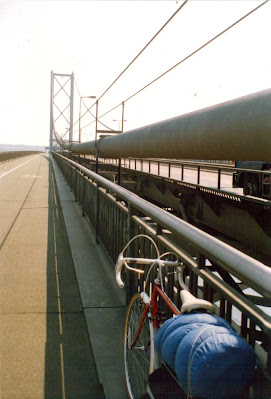
After last week's post , I would like to say how easy it was for me to get back in the saddle but it wasn’t. It was hard.  I don't want to be misleading. Like breaking most habits it required effort, a bloody minded determination to gain traction. That and a plan. This wasn't my first attempt at cycle commuting. In last week’s post, I mentioned the time I did cycle to work but was put off repeating it by a combination of my physical condition, the riding conditions and doom-laden predictions from my colleagues. On a few other occasions I have tried with slightly better success, but still not enough to fully make the transition to cycling as my main mode of transport. Previous plans involved breaking myself in gently, cycling once a week for a few weeks then steadily increasing the frequency as I got fitter and more used to the traffic. Three weeks in a row was my record, cycling to work on two days in the last week. It wasn't frequently enough to build fitness or, more ...

How I fell off my bike

Image
Not literally, but how I got out of the habit of cycling. This is the first of a series of three posts on my personal journey away from regular cycling then back into it over many years. This post talks of how I used my bike to get around and some of the barriers to me getting back into it. In the next post I will talk about how I got back into it, in a manner, and the final post brings us up to date. This is only my perspective but I'm sure it is not unique and you may have similar experiences. It happens to so many of us, that we regularly cycle as children and adolescents then “grow” out of it as adults. Until I left school I cycled everywhere: to school, to the shops, to my Saturday job, to the swimming baths and any other activities that were farther than a five minute walk. During the holidays I would make 30 mile (50km) round trips to visit my grandparents or 70 mile (110km) round trips to the beach and, a couple of times, longer trips over several days, such as the tri...

The Blue Marble

Image
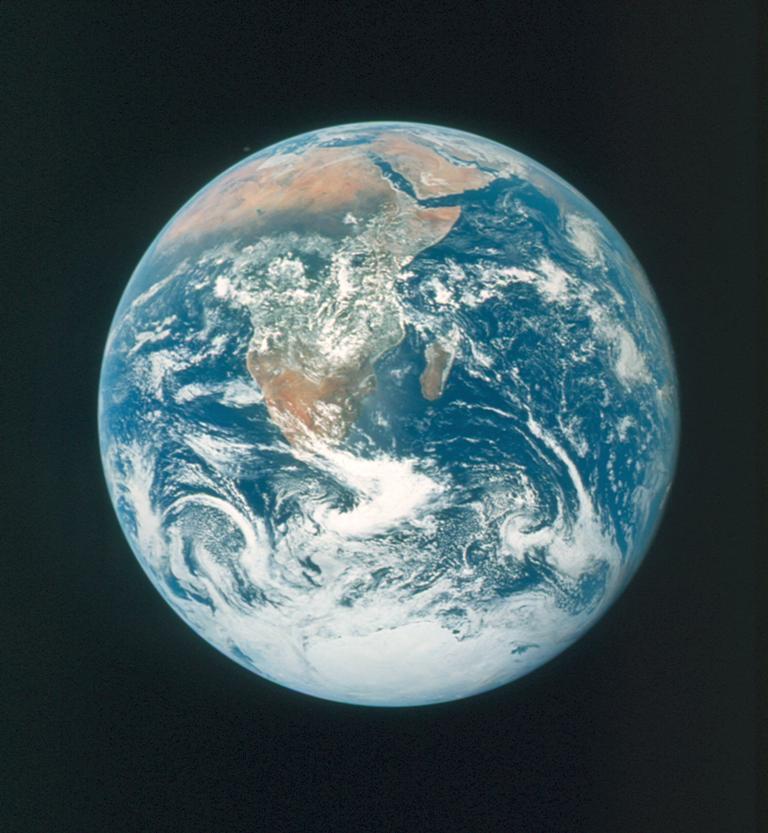
Please join me in celebrating fifty years of this iconic image.   Taken from the Apollo 17 mission on December 7th 1972, this famous image changed the way we view the world.  All of humanity is captured in the field of view (except for the crew of Schmitt, Evans and Cernan). It shows ourselves as others would see us, from the outside looking inwards.   It is the only world we will ever know, our home. We must look after it. Respect it. There is no doubt that this image acted as a catalyst to the environmental movement.  It lays bare how fragile and vulnerable we are in the vast emptiness. . We have filled all the hospitable corners of the planet and it is clear that there is nowhere else to go.   The image was captured while travelling between Earth orbit and the moon, where Scmitt and Cernan walked a few days later. They were the last humans to stand on an extraterrestrial body.  In the time since it was taken, there have been huge advances ...

EWM Returns

Hello! After an extended break, EcoWarriorMe returns with big plans for the year ahead.  Previous posts focused on actions we as individuals could take as well as emphasising that climate change is real, and a threat that needed urgent attention. The world has moved on a little in the past few years.  There is a greater acceptance of the science behind climate change and the need for urgent action.  Many organisations, from local and national government to NGOs and business have declared a Climate Emergency.  The real power to change comes from government and business so this is comforting.  To a certain degree. Individual choices still matter but not as much as larger energy users and service providers. I used to advocate for us all to play our part.  This is still important.  But not to the point where it harms our physical or mental wellbeing. We cannot blame the powerless victims and ask them to make all the sacrifices.  You will have benefite...

December Weather Patterns

Image
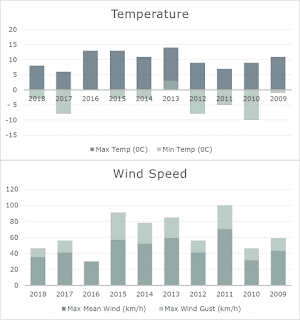
Do you remember the weather last December? Some of it wasn't pretty, such as Storm Deirdre.  In case you have forgotten, the Met Office's report states the following impact: Freezing rain caused treacherous conditions and multiple traffic accidents, particularly on the M74 and across southern Scotland, and the A66 across the North Pennines was closed. There were further traffic incidents across parts of England and Wales, reports of fallen trees and several hundred homes without power across parts of Wales and Scotland. Planes had to abort landings at Manchester Airport due to strong crosswinds. And here are some contemporary reports: https://www.theguardian.com/uk-news/2018/dec/15/storm-deirdre-batters-britain-snow-freezing-rain https://www.bbc.co.uk/news/uk-scotland-46574942 https://www.theguardian.com/uk-news/2018/dec/16/storm-deirdre-set-to-ease-after-snow-and-gales-wreak-havoc In short, not a great few days to be out and about. Was this a one off or more typical...

Is There a Place for Genetics in Agriculture?

Many people oppose genetically modified crops. There is fear that s plicing genes from one species in to another will, for example, turn ordinarily benign rice in to a ravaging carnivorous organism akin to Wyndham's triffids. While that may be an exaggeration, there are good reasons to, if not fear, at least be wary of creations made by artificially changing or combining genes. Concerns mainly fall in to one of the following categories: unforeseen or unintended impacts on stable ecosystems; control of seeds by powerful agri-corporations limiting farmers' ability to grow the crops; or adverse health effects from unnatural Franken-foods. Let us consider the first category, which has the biggest potential impact on the environment. Crops have been genetically modified for a number of reasons, all with the aim of increasing yield. Increased yield is not a bad thing but at what cost. One method is to improve resistance of plants to pesticides, meaning that more pest...

Can't see the Wood from the Trees (because the forest is burning)

Whether royalist or republican, we must applaud Prince Charles for using his power and influence to highlight the great problem of deforestation and its link to climate change as well as loss of biodiversity. http://www.theguardian.com/environment/2015/dec/01/no-plan-b-for-climate-change-without-forests-prince-charles-tells-paris-summit http://www.bbc.co.uk/news/science-environment-34973166 But we should we be taking advice from him? If we all took our lead from Charles, we would be sure to hit a four degree temperature rise by the early 2030s[1]. Alternatively if we mirrored land use in his personal estate, the Duchy of Cornwall, we would lose 90% of our forests, since the Duchy is only 3% forested compared to 31% of the world's land surface. And if we were each granted an estate similar to Charles, all of the usable land surface would be gone after the first 120,000[2] people and the rest would have nowhere to go! No matter how extravagant the lifestyle, a global popula...

Plastic Bag Charge

Tomorrow, England catches up with the rest of the UK in imposing a levy on single use carrier bags. Figures for Scotland, which introduced the charge last year, indicate an 80% reduction in their use due to the levy and large drops have also been seen in Wales and Northern Ireland which introduced charges in 2011 and 2013 respectively. The charge being introduced in England is not universal - it is limited to larger shops and smaller convenience stores can, conveniently, still hand out single use bags free of charge. And it only covers plastic bags, not other single use bags.  Bur still, its a start.  The Scottish charge applies to all retailers and includes not only plastic bags but also bags made from paper and other materials.  While paper is biodegradable and renewable (in that more trees can grow) it is still not a perfect solution . Also, the money charged goes directly to the retailer unlike the Scottish charging scheme in which the money is given to charities...

The Clyde Fastlink - A Follow Up

Image
In the three years and three weeks since EcoWarriorMe's first post on Glasgow's Fastlink priority bus route there has been a whirlwind of inactivity, culminating in a buses  running along the dedicated lane along the Broomielaw for a few weeks this summer as the new Southern General hospital opened its doors. Then stopped while some modifications were made. Then back again. And now, according to BBC Scotland: Bus firms ditch 'too slow' £40m fast lanes in Glasgow 4 hours ago   From the section Glasgow & West Scotland Image copyright Google Image caption McGill's is one of two operators to withdraw from using the Fastlink lanes Two major bus firms have stopped using the newly-built  £40m Fastlink lanes in Glasgow  because they are too slow. On the positive side, bus shelters have been added to the route in the last few weeks so you can stand out of the rain waiting for the bus that will never come (surely such facilities should be an integral ...

Connecting with Nature

Image
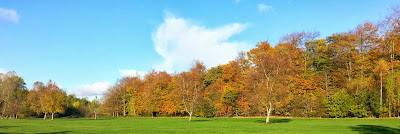
With fresh reports on how disconnected we are becoming from nature, we took the opportunity this fine weekend to reconnect, see what's out there and get muddy.   The changing seasons, summer into autumn in this case, show Glasgow's parks at their best. Here is Pollok.   A riot of autumn colour.    Calm and soothing down by the river.   And in the bright sunlit woods   By the old stable block.   In the walled garden.   Leaves on fire.   Mushrooms thriving, doing there thing.   Trees.   Ornamental Gardens.   Leaves of all shapes and colours.   Berries, abundant harvest for the birds and animals.