Posts

Showing posts with the label Nature

Connecting with Nature
Image
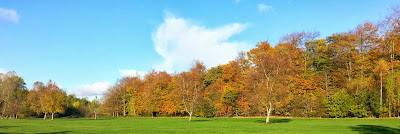
With fresh reports on how disconnected we are becoming from nature, we took the opportunity this fine weekend to reconnect, see what's out there and get muddy.   The changing seasons, summer into autumn in this case, show Glasgow's parks at their best. Here is Pollok.   A riot of autumn colour.    Calm and soothing down by the river.   And in the bright sunlit woods   By the old stable block.   In the walled garden.   Leaves on fire.   Mushrooms thriving, doing there thing.   Trees.   Ornamental Gardens.   Leaves of all shapes and colours.   Berries, abundant harvest for the birds and animals.   

The Hunt

You know how it ends. The bloody and torn carcass, ripped apart by dogs and barely recognisable as the fox it so recently was, fresh blood on the snout of the most successful hounds and riders pleased with a successful hunt. It is illegal of course, and has been since 2005 when The Hunting Act, 2004 came into effect. But that hasn't stopped it and the reaction of many associated with the hunt do not appear to accept that the law applies to them. Between 2005 and 2010 there have been only eight convictions of employees of registered hunts. Why is the number so low? Is it because the Act is effective and hunts are no longer killing foxes or is it because the authorities are turning a blind eye?

Summer Holidays

Have you had your summer holiday yet? Did you stay local or did you fly away somewhere exotic? How do you fancy this three thousand mile trip: First stop off in France to soak up the culture then on to Mont Blanc and the Swiss alps for a few weeks rest and recuperation in the beautiful mountain scenery. It can be cool in the mountains, even in the summer so head south into Italy, perhaps Tuscany or further south again to Sicily. If that isn’t warm enough, take a short hop over the Mediterranean Sea to Libya then across the Sahara to Lake Chad. It’s not an itinerary that you’ll find in many travel brochures but it is quite popular in certain circles.  Mungo, a bird from near Loch Katrine made that very trip and met up with Chance who travelled by a different route from Loch Katrine, via Belgium and Austria, and Chris from the Norfolk Broads.  They are all Cuckoo’s that have been tagged by the British Trust for Ornithology (BTO) in order to track their annual migrations to A...

Tell Shell

Image
Tell Shell that you don't want them drilling for oil in the Arctic. It is one of the least spoiled places on earth but Shell want to explore for oil. Climate change is more rapid in the Arctic than almost any where else on the planet, leading to greater areas of the Arctic Ocean being ice free than ever before in the history of oil exploration. This makes oil exploration easier, an opportunity that Shell are keen to exploit. But picture this: if a leak or spill occurs as the ocean begins to freeze over for the winter, there are no tools or methods available to contain and recover the oil. Floating booms won't work. Detergents won't work (and can cause damage themselves). The oil will be locked in the ice, travelling around the ocean until it melts next year, depositing a filthy slick

City Living

Image
I took this photograph while out on a bike ride with the kids at the end of March this year.  I had been thinking about urban biodiversity after reading an article on Nature Deficit Disorder and this view caught my attention.  We were in Robroyston Park, one of Glasgow's parks which is designated as a Local Nature Reserve.  A diverse range of habitats are present. The pond at centre frame attracts the swans pictured and other birds, insects, fish and amphibians.  Particularly striking are the brightly coloured dragon flies (or damsel flies) when in season.  To the right of the frame is deciduous woodland providing cover for small mammals and birds, including a heron which nests in the trees and to the left we have rough grassland which is attractive to many insects and various ground nesting birds. Juxtaposed in the background are several blocks of high rise flats - reminding us that we are in the midst of a densely populated urban environment. For ...

Wind farms blight the Landscape

Image
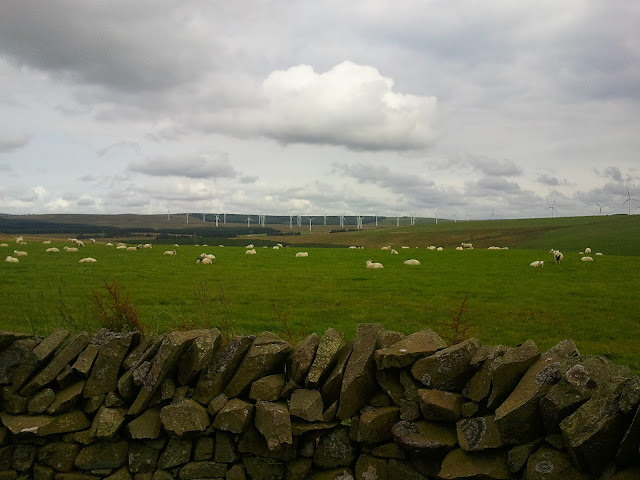
Are wind farms a blot on the landscape? What are those white things over there? Oh, they're sheep.

Poaching: Demand and Supply

Over the past month I've tweeted frequently and blogged on water and sanitation , conservation of rhinoceros and tigers and solar electricity feed-in-tariffs , all of which are important issues in themselves but perhaps more important are the links between them. China is now the world's largest manufacturer of solar panels as a direct result of our drive to reduce carbon emissions, for example by using subsidies such as the UK's feed-in-tariff system. This is part of the exponential growth in manufacturing in China and south east Asia to satisfy our demand for cheaply  manufactured products with off-shore carbon footprints. This growth has created many wealthy individuals, some of whom are using their newly found disposable income for the purchase of  traditional   medicines  such as rhino horn and tiger parts . Of course such remedies do not work, but that knowledge hasn't stemmed demand. Crossing the Indian Ocean to Africa and we find many people trapped...

Along Came a Spider

Image
It is that time of year where spiders start migrating indoors, getting themselves stuck in the bath, climbing the wall or running across the bedroom ceiling. Do they creep you out or do you like them? They are one of nature's helpers fulfilling a valuable role in managing the population of common pests in the garden during the summer so lets not be too hard on them when the seek sanctuary. Legend has it that a spider was the unlikely inspiration for Robert the Bruce seven centuries ago while hiding in a cave in exile.

The Beacon

Image
Ben Lomond, 974m, 3194ft Beinn Laomainn, "The Beacon Hill" Sitting on the peak of Ben Lomond at 974m above sea level [1]  it is difficult to imagine how climate change will affect this, the most southerly Munro [2] , and the surrounding landscape. The rock beneath me has hardly changed for thousands of years. That does not mean that it has never changed nor ever will by both natural processes and, increasingly, human activity. The Islands of south Loch Lomond, from the summit of Ben Lomond The name comes from the gaelic word for "beacon" but the origins of this name are lost in the mists of time. Perhaps fires were once lit on its summit, linking it with a network of similar beacons throughout Celtic Britain, or it may simply be due to its prominence, visible over large areas of the lowlands - a symbol of what lies beyond.